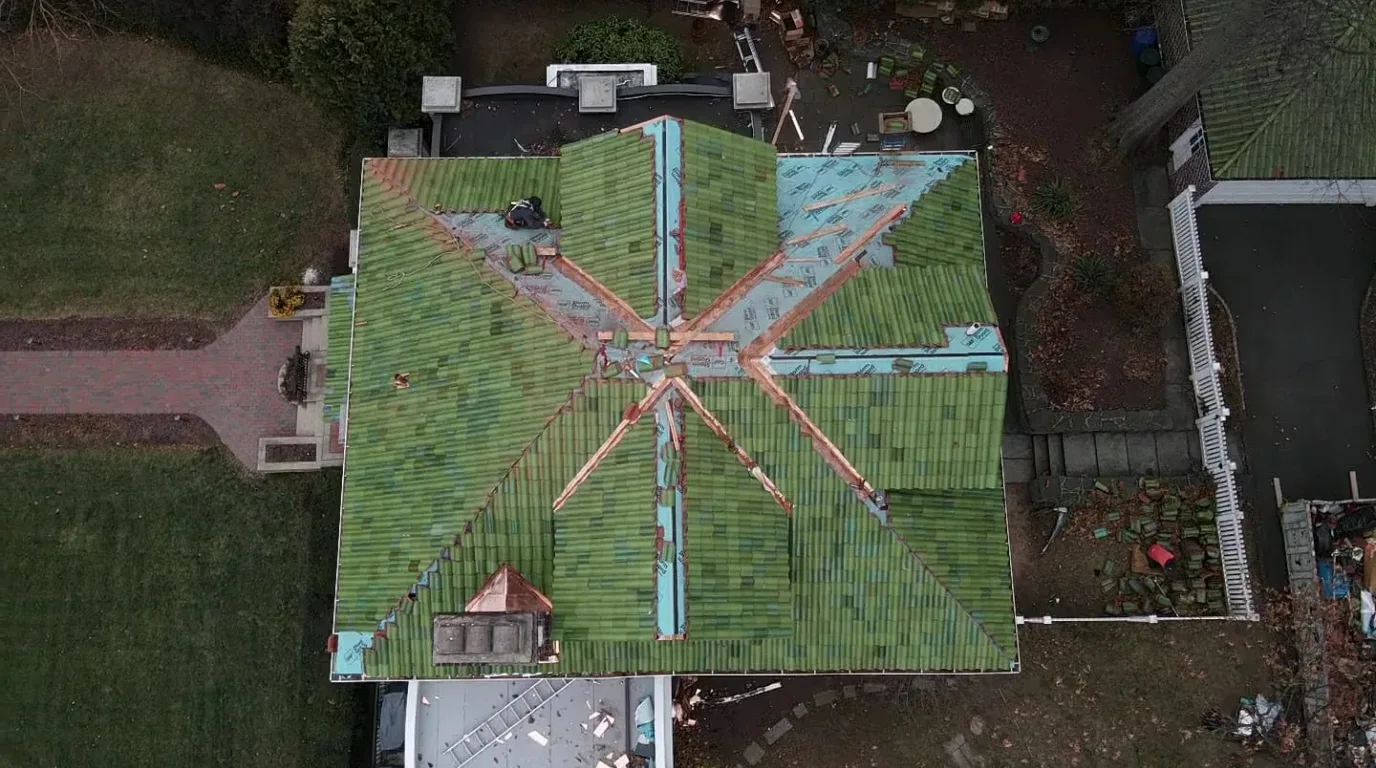
Every New Jersey winter the same thing happens on thousands of roofs: snow melts, runs down to the cold edge, refreezes into a ridge of ice, and then the next round of meltwater has nowhere to go but sideways, up under the shingles, and into the house. That ridge of ice is an ice dam, and the important thing to understand is that it is not really a roofing defect. It is a symptom of what is happening in your attic.
Why ice dams form
An ice dam needs three things: snow on the roof, a roof surface warm enough to melt it, and a cold edge to refreeze it. The middle one is the part you can control. Heat leaking from the living space into the attic warms the underside of the roof deck, which melts the snow sitting on the upper slopes. That meltwater runs down to the eaves and the overhang, which are not warmed from below, hits freezing air, and turns back to ice. Repeat that cycle for a few cold days and the ice builds into a dam that traps every drop behind it.
So the two root causes are heat loss and poor ventilation. An attic that is under-insulated lets warm house air rise into it, and an attic that is poorly vented has no way to flush that heat back out, so the deck stays warm and the melting keeps going.
The fix that actually lasts: insulation plus ventilation
Chipping ice off the roof every February treats the symptom. The permanent fix keeps the roof deck cold so the snow never melts unevenly in the first place, and that comes down to two things working together:
- Air sealing and attic insulation: seal the gaps where warm air leaks up into the attic (around recessed lights, the attic hatch, plumbing and wiring penetrations, and the top plates of walls), then bring the insulation up to a modern depth. Northern New Jersey attics generally want somewhere around R-49 to R-60 of insulation to keep house heat where it belongs.
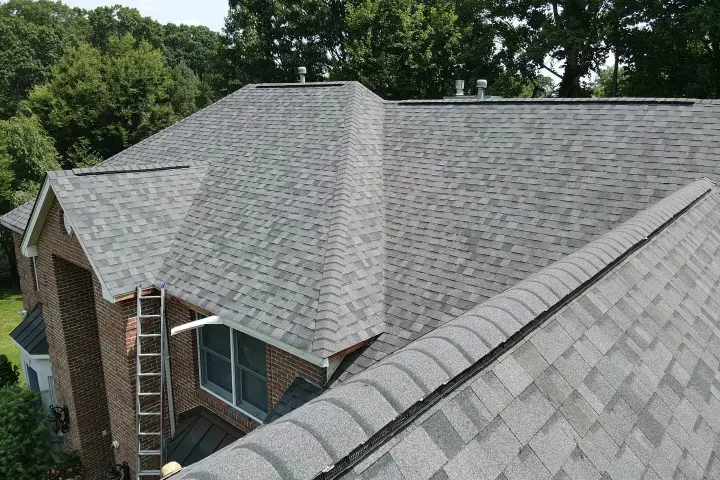
- Balanced ventilation: cold outside air needs to enter low at the eaves through soffit vents and exit high at the peak through a ridge vent. That steady flow of cold air under the deck carries away any heat that does get through, holding the whole roof surface close to the outdoor temperature. Intake and exhaust have to be balanced, because a ridge vent with blocked or missing soffit intake does almost nothing.
The two work as a pair. Insulation slows the heat getting into the attic, and ventilation flushes out whatever heat gets through. Do only one and you get partial results; do both and the ice dams usually stop entirely. That is why correcting attic ventilation and insulation is the real ice-dam repair, not the steaming that gets you through a bad week.
What NOT to do
- Do not chip, hammer, or shovel the ice off. A metal tool on a frozen roof cracks shingles and gouges the membrane on flat sections, so you trade a leak for a much bigger repair. You are also standing on an icy slope, which is how people fall.
- Do not pour hot water or dump salt straight onto the roof. It refreezes lower down, moving the dam rather than removing it, and rock salt corrodes metal flashing, gutters, and fasteners.
- Do not run a torch or any open flame near the roof. It is a real fire risk and it solves nothing.
- Do not treat heat cables as a cure. Zig-zag heat cables can hold a channel open in one trouble spot, but they mask the underlying attic problem and add to the electric bill every winter. They are a bandage, not a fix.
Safe things you can do yourself
There are a couple of low-risk moves a homeowner can make from the ground:
- Pull the fresh snow off the lower few feet of the roof with a long-handled roof rake, standing on the ground, never on a ladder. Removing the snow at the eaves removes the material the dam is built from.
- Keep gutters and downspouts clear going into winter, so the first meltwater has a path off the roof instead of pooling at a blockage and freezing there.
- Watch for the early warning signs during a thaw: big icicles along the gutter line, a thick band of ice at the eaves, or water staining on a ceiling near an outside wall.
When to call for removal
If ice has already dammed up and water is dripping inside, that is the point to stop and call. Active removal is done with low-pressure steam, which melts the ice off without harming the shingles the way chipping or a pressure washer would. It buys back the rest of the winter without adding a repair. Once the thaw comes, the lasting work is closing the attic gaps and correcting the ventilation so next winter does not repeat, and repairing any shingle or flashing damage the backup already caused.
Ice dams are one of the New Jersey-specific reasons roofs wear out early, right alongside heat and storms. If you had them last winter, summer is the time to fix the cause, not to wait for the next cold snap. Request an estimate and we will put fixed written pricing in front of you for the attic and roof work, with no obligation.