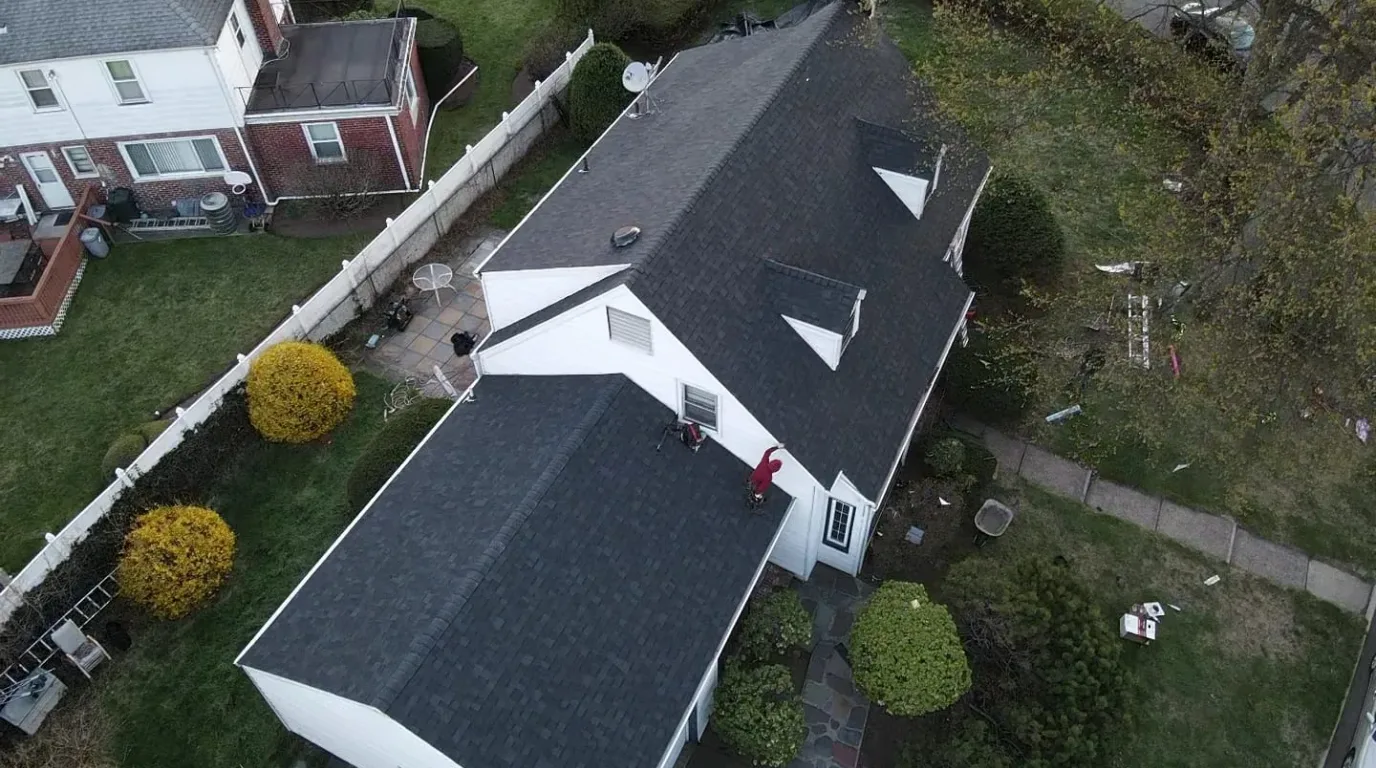
Most homeowners think of a roof as shingles, and the shingles are the part you see. But when a roof leaks, the shingles are almost never the cause. The cause is flashing: the metal sealing the seams between shingles and everything they butt up against, including walls, chimneys, vents, skylights, valleys, and eaves.
If you've ever had a stain on a ceiling near a chimney or wall, you've met a failed flashing detail. Here's a working roofer's guide to what flashing is, the types you'll see on a New Jersey home, and why installation quality matters far more than the brand of metal used.
What flashing actually does
Shingles work by overlapping. Water runs over the top of one and onto the next, never finding a seam to enter. The trouble starts wherever the roof has to stop overlapping itself: at a wall, a chimney, a pipe, the edge of the roof. Flashing bridges those interruptions, redirecting water back onto the shingle field instead of letting it find its way to the wood deck underneath.
Done right, flashing is invisible and lasts as long as the roof. Done poorly (or skipped entirely in favor of a thick smear of roofing tar), it's the single most common reason an otherwise healthy roof leaks.
The flashing types on a typical NJ home
- Step flashing: small L-shaped pieces of metal woven into each shingle course where the roof meets a wall. Every step in a vertical wall gets its own piece. This is where chimneys leak when a roofer takes shortcuts.
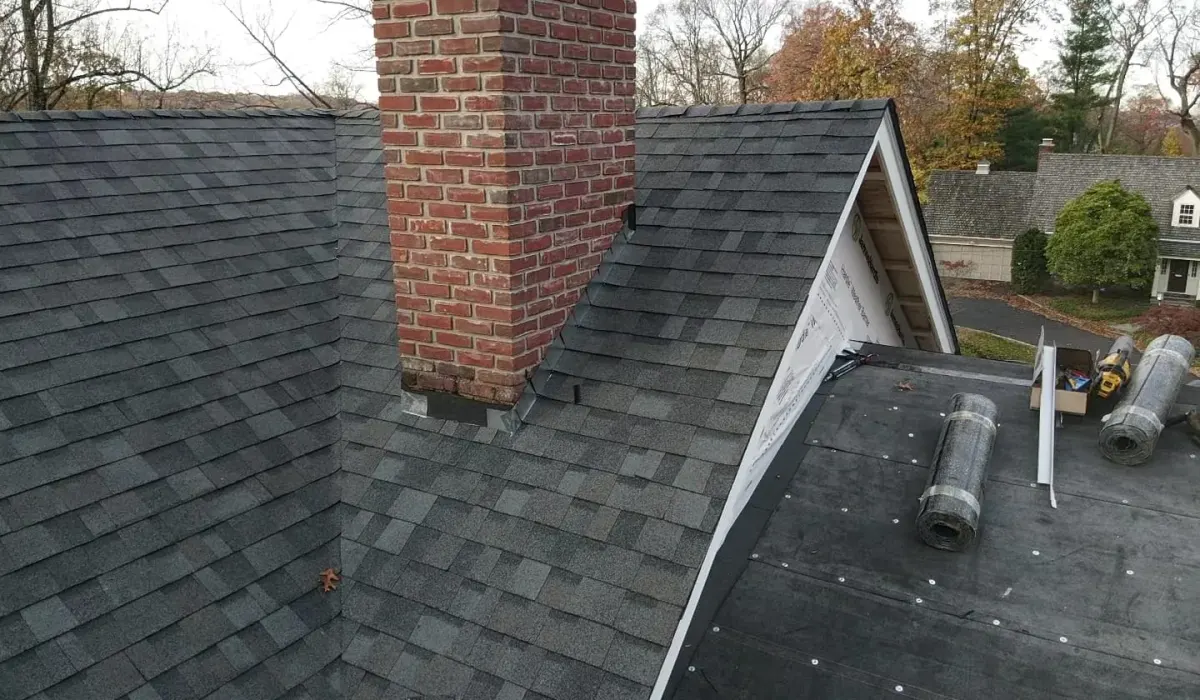
- Continuous (apron) flashing: a single long piece of metal where the roof meets a horizontal break, like the top of a dormer wall or the back of a chimney.
- Counter flashing: the second layer that overlaps step flashing on masonry chimneys and walls. It tucks into a saw-kerf cut into the mortar joint and seals with mortar or polyurethane.
- Valley flashing: metal lining the V where two roof planes meet. Open valleys show the metal; closed valleys hide it under woven shingles. Either way, the metal is what protects the seam.
- Drip edge: L-profile metal along eaves and rakes. It directs water off the roof into the gutter and away from the fascia. NJ code requires it on new installations.
- Vent pipe boots: the rubber-and-metal collars sealing plumbing stacks. These are the shortest-lived component on most roofs; the rubber cracks after 10–15 years of UV exposure.
- Skylight flashing kits: every skylight has a four-piece kit (head, sill, two sides). Using the manufacturer-matched kit is non-negotiable. Generic flashing on a brand-name skylight voids the warranty and usually leaks.
Materials: what works in NJ weather
New Jersey roofs see hard freeze-thaw cycles, salt air near the coast, and ice dams in the colder counties. That narrows the practical material list:
- Aluminum: the most common today. Light, easy to form, corrosion-resistant, affordable. Fine for most residential work.
- Copper: premium, lifetime-rated, and develops a protective patina. Used on slate, tile, and high-end installations. Expensive, but you install it once.
- Galvanized steel: durable and strong, but the zinc coating wears thinner near the coast and around acidic chimney exhaust. Avoid in valleys with heavy pine debris.
- Lead: traditional for masonry chimneys and very long-lived; tooled by hand. Less common now but still the right call on historic homes.
Installation matters more than material
I've seen $40-a-square-foot copper flashing leak because someone bedded it in tar instead of mortaring counter flashing into a kerf. I've also seen plain aluminum step flashing keep a chimney bone-dry for 25 years because the installer wove every piece and counter-flashed properly. The metal is rarely the failure point. The technique is.
The two shortcuts to watch for: continuous "L" flashing run up a sidewall instead of properly stepped pieces; and roofing tar used as a substitute for counter flashing on chimneys. Both look fine for two or three years, then fail.
How to tell your flashing is failing
- Rust streaks running down siding from a chimney or skylight
- Ceiling stains that appear during driving rain but not during regular rain (a wind-driven flashing leak)
- Visible black roofing tar smeared at any flashing seam, which is usually a Band-Aid over a real problem
- Counter flashing that has pulled out of the mortar joint, leaving a gap you can see daylight through
- Cracked rubber on vent pipe boots, easy to spot from the ground with binoculars
Repair or replace?
Flashing can almost always be repaired without redoing the whole roof, but only if the surrounding shingles are intact enough to lift and re-weave. If your roof is past 20 years and you're looking at a flashing repair near a chimney or valley, it's worth getting the inspection done at the same time as your next replacement quote. Sometimes the math says replace the system; often it says fix the flashing and buy another five to ten years.