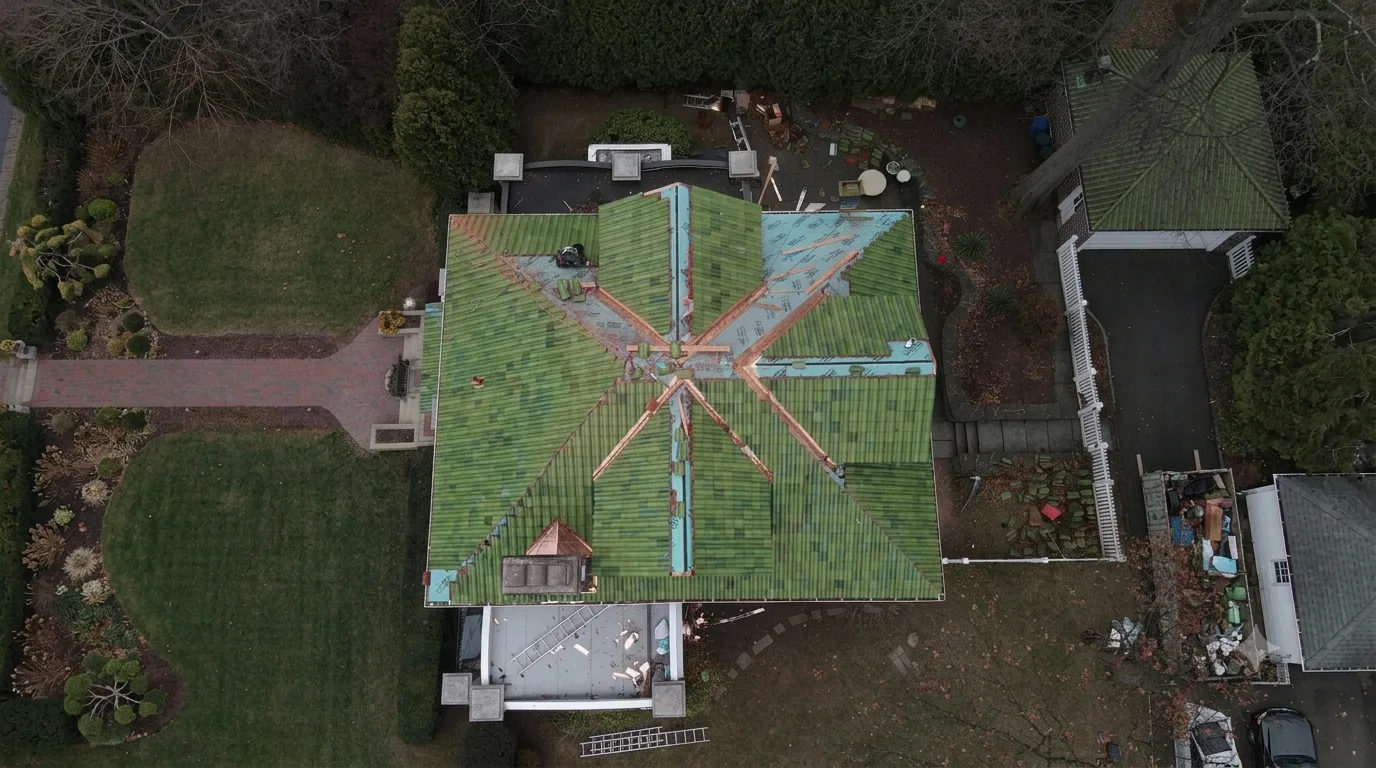
It is a fair question, and the answer for New Jersey is usually yes for a replacement and usually no for a small repair. New Jersey regulates construction statewide under the Uniform Construction Code, and roofing falls under it. The short version: a full roof replacement or tear-off generally requires a construction permit, while most minor repairs are treated as ordinary maintenance and do not. Where you land comes down to the scope of the work.
The rule of thumb
The line most New Jersey towns draw is roughly this:
- Needs a permit: tearing off the old roof and installing a new one, replacing the roof deck or sheathing, structural work on rafters or trusses, and in most municipalities recovering or reroofing a whole roof. If the crew is stripping the roof to the deck, assume a permit is required.
- Usually does not need a permit: replacing a handful of blown-off or broken shingles, patching a leak, resealing or replacing a piece of flashing, swapping a vent boot, and similar small work that falls under ordinary maintenance and repair.
- Gray area worth asking about: partial reroofs, large repairs, and anything that touches structure. When in doubt, the contractor or the town construction office can tell you before the work starts.
The practical test is scope. A repair keeps the existing roof system in place and fixes a part of it, and work like that usually does not need a permit. A replacement removes and rebuilds the system, and that is what the permit exists to oversee.
Cost is part of this decision too. Permit fees are a small line on a replacement, typically a few hundred dollars set by the municipality and folded into the contract. If you are still trying to work out whether you are facing a repair or a replacement in the first place, the repair-versus-replacement math and typical repair prices are worth reading before you commit.
What the permit actually covers
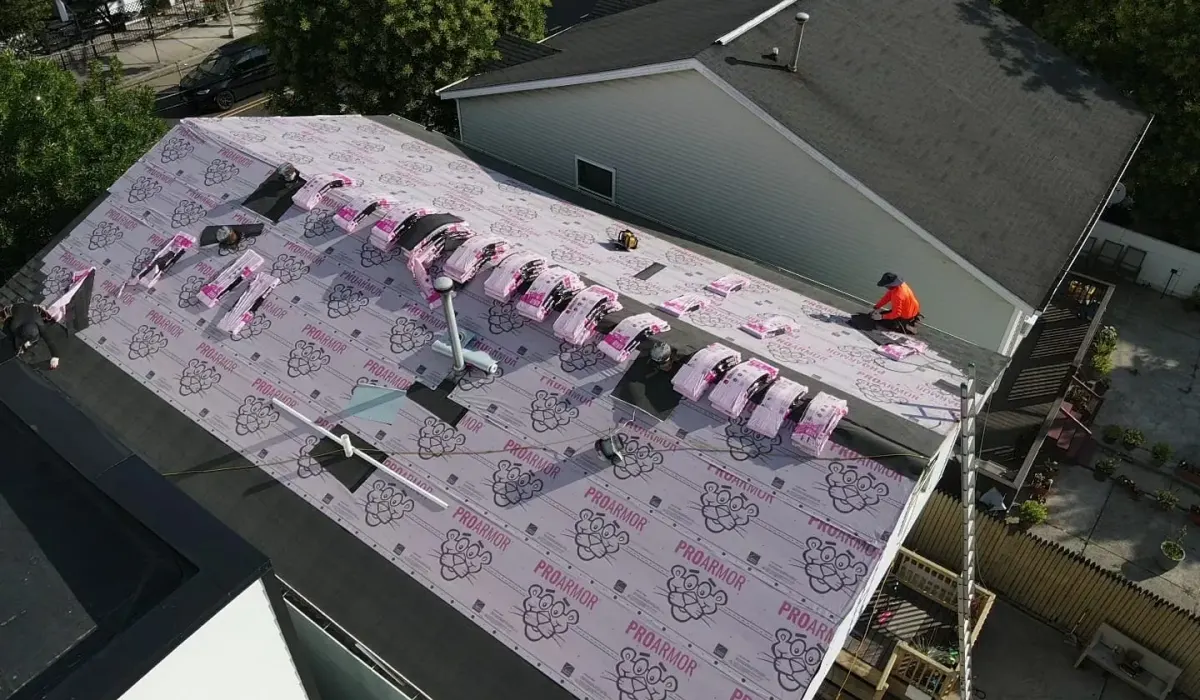
A roofing permit in New Jersey is issued under the building subcode of the Uniform Construction Code. It is not red tape for its own sake. It puts a local inspector on the job to confirm the work meets code, which protects you as the homeowner. Depending on the town and the scope, that can cover things like:
- Tearing off to the deck rather than roofing over old layers, so the sheathing can be seen and any rot replaced.
- Proper underlayment and, at the eaves, the ice-and-water shield membrane that code requires in New Jersey to guard against ice-dam backup.
- Drip edge at the eaves and rakes, a correct nailing pattern, and proper flashing at walls, chimneys, and valleys.
- Adequate attic ventilation, since airflow is tied to both roof life and code compliance.
Inspections: what to expect
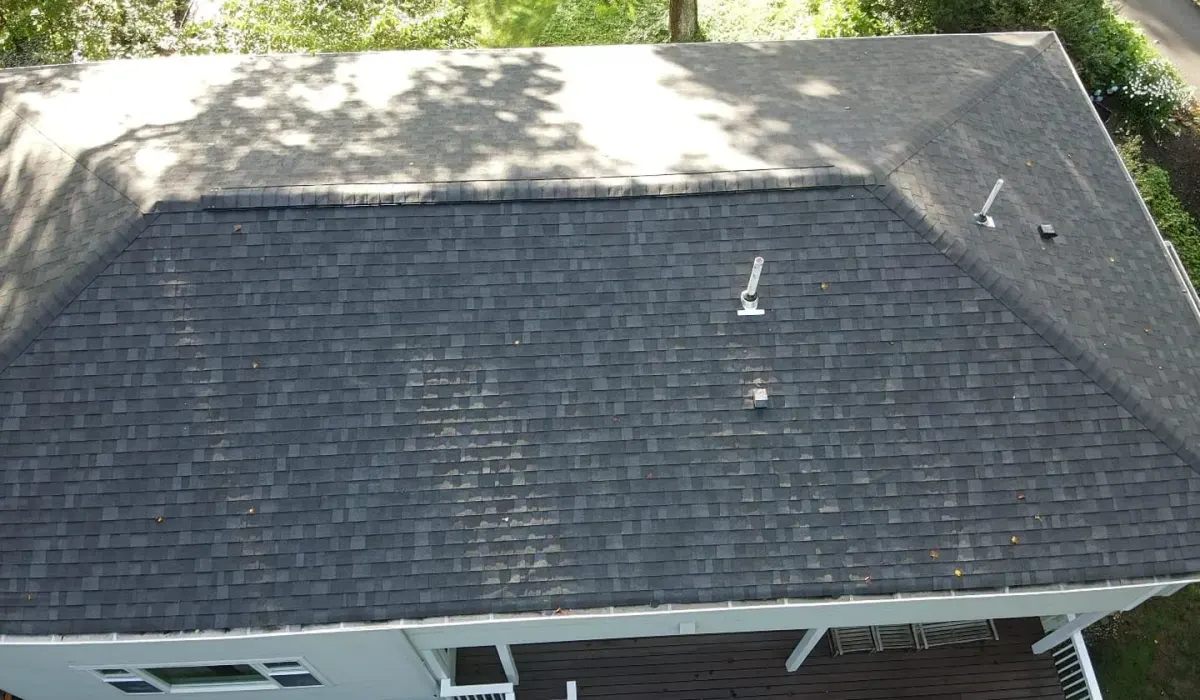
The inspection process is straightforward. After the permit is issued, the town schedules one or more inspections depending on the work. If the deck is being replaced or the job is extensive, an inspector may want to see the sheathing and nailing before the new roof covers it. Every permitted job gets a final inspection once the roof is done. When it passes, the permit is closed out, and that closed permit becomes part of your home record. That matters later, because when you sell, buyers and their attorneys often ask whether major work like a roof was permitted and closed.
Who pulls the permit
You do not have to deal with the construction office yourself. In New Jersey a licensed contractor pulls the permit for you, and handling it is part of a properly run roof replacement. Any company doing this work should be a registered New Jersey Home Improvement Contractor. It is also a quick way to screen a contractor: one who offers to skip the permit to save a few dollars is telling you something. An unpermitted replacement can surface as a problem at resale, can complicate an insurance claim later, and leaves the work with no independent inspection standing behind it.
The bottom line for homeowners
If you are replacing your roof in New Jersey, plan on a permit, and expect a reputable contractor to handle it as a normal part of the job. If you are having a small repair done, a few shingles or a flashing fix, you almost certainly do not need one. When the scope sits somewhere in between, ask before the work starts. If you want a clear answer for your specific project, along with fixed written pricing and no obligation, request an estimate and we will walk you through the permit and the scope together.